Independent oversight for every stage of your project.
Most international owners cannot be on site while their property is being built or renovated. Cavalma coordinates communication, follows progress against the agreed programme and keeps every stage organised, working alongside the qualified architects, engineers and contractors appointed to the project.
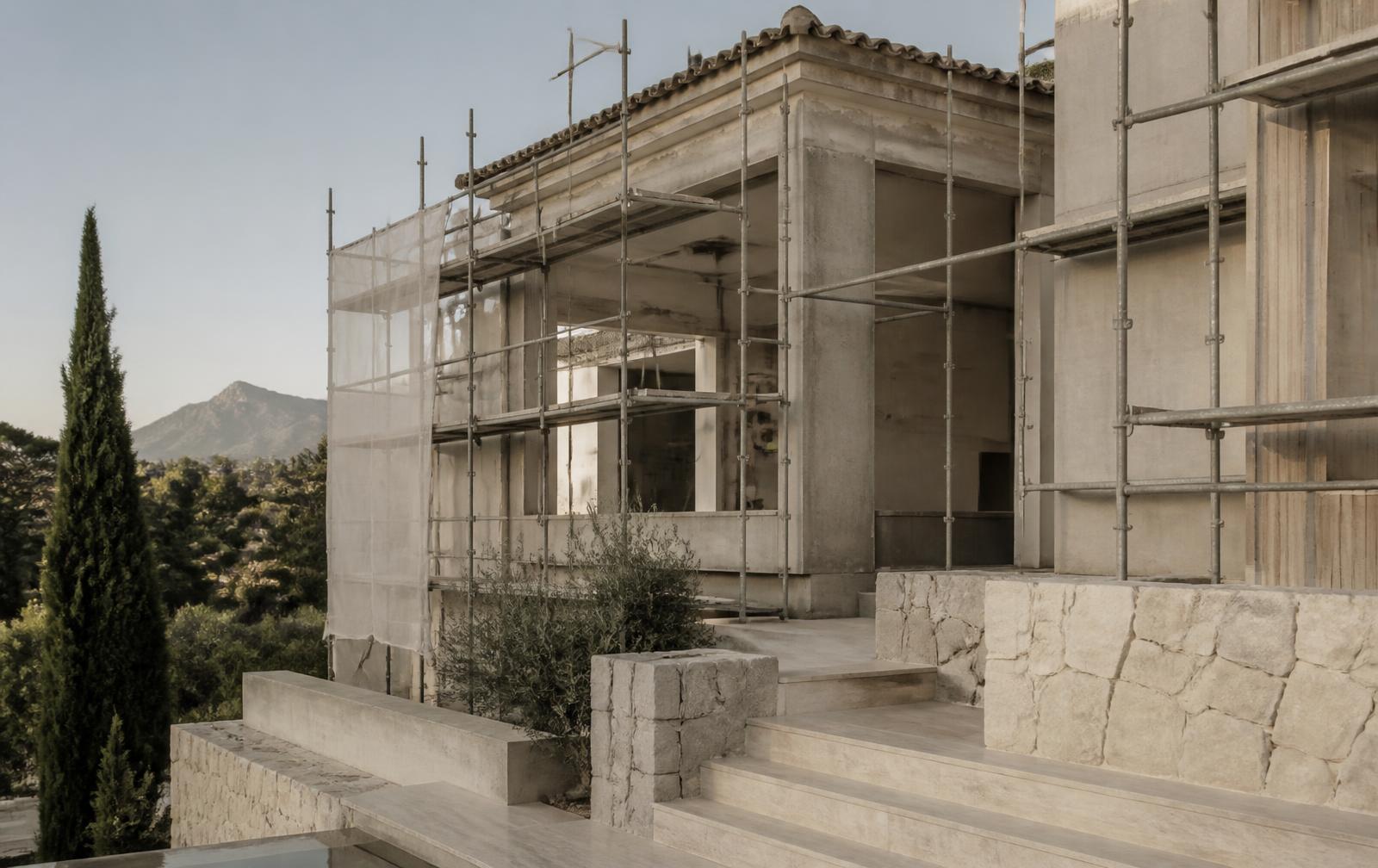
Nothing on site is difficult on its own. Everything at once, from abroad, is.
A villa project runs on a dozen parallel conversations: the architect, the technical architect, the main contractor, the specialist trades, the interior designer, the supplier lead times, the community of owners, the town hall. Each is reasonable in isolation. Together, and in a second language, they consume the owner's week.
Problems rarely announce themselves. A material arrives three weeks late and the tiling sequence shifts. A detail is built as drawn, but not as the owner understood it. A decision waits for an answer that nobody realised was outstanding. By the time these surface, the cost of correcting them has already grown.
Cavalma is a Private Office. We do not design the project, we do not build it, and we do not take on the legal role of the appointed site management team. We represent the owner's interests: keeping communication in one place, following progress, recording what was agreed, and making sure the owner is asked the right question at the right moment.
Structural calculations, technical certificates, licences, health-and-safety coordination and statutory site management remain the responsibility of the qualified licensed professionals appointed to the project. Cavalma coordinates on the owner's behalf and does not replace them.
- Multiple contractors working to different schedules
- Programme changes that arrive by message, not by document
- Language barriers on technical detail
- Decisions that block the next trade
- Consistency of quality between phases
- Site access, deliveries and storage
- Variations agreed verbally and remembered differently
- Ownership from another country and time zone
Ten stages, from first review of the project to handover support.
The depth of involvement is agreed at the start: a fortnightly presence on a straightforward refurbishment, or a close weekly rhythm on a full villa build. The sequence stays the same.
- 01
Initial project review
We read the project as it stands: scope, drawings, budget, programme, appointed professionals and what the owner expects the finished house to be. Where something is missing or ambiguous, we say so before work begins.
- 02
Documentation review
Contracts, quotations, specifications, licences and insurance evidence are collected in one place, so that later discussions reference a document rather than a recollection.
- 03
Team coordination
Lines of communication are agreed with the architect, contractor and specialists: who decides what, who is informed, and how questions reach the owner without arriving as eight separate messages.
- 04
Timeline monitoring
Progress is followed against the agreed programme. Slippage is reported when it appears, together with what caused it and what can realistically be recovered.
- 05
Site visits
Attendance at the agreed frequency and at meaningful moments: setting out, first fix, waterproofing, before surfaces are closed, and before finishes are installed.
- 06
Progress reporting
Written updates with dated photographs, so an owner in London, Riyadh or Moscow sees the same house their neighbour would see by walking in.
- 07
Quality observations
Workmanship and execution are observed against the specification and the drawings. Observations are raised with the contractor and the architect while correction is still inexpensive.
- 08
Change coordination
When the owner requests a change, or the site demands one, we ensure it is priced, documented and approved in writing before it is built.
- 09
Completion review
A structured walk-through of the finished work, listing outstanding items room by room and system by system, and tracking each to closure.
- 10
Handover support
Warranties, manuals, service records, keys and access are assembled and passed to the owner, with a clear route into ongoing property care if it is wanted.
One relationship on the owner's side of the table.
Every professional on a project has a legitimate perspective. The architect protects the design. The contractor protects the programme and the margin. The specialist protects their own scope. All of that is normal, and none of it is a substitute for somebody whose only interest is the owner's.
That is the role we hold. We work respectfully alongside the appointed team, we do not instruct licensed professionals outside their responsibility, and we do not pretend to certify work that only they can certify. What we provide is attention, memory and a single accountable point of contact.
Owner representation
We attend, ask and record on the owner's behalf, in the owner's language, and present decisions with the information needed to make them.
Written before verbal
Scope, variations and approvals are documented. A project remembered in writing is a project that can be discussed calmly six months later.
Early rather than loud
A quiet question at first fix is worth more than a formal complaint at completion. We raise observations while they are cheap to resolve.
Respect for professional boundaries
Regulated inspections, certificates and statutory duties stay with the qualified professionals who hold them. We coordinate; we do not overreach.
What supervision covers in practice.
Scope is agreed in writing at the outset and adjusted as the project moves between phases.
PROJECT COORDINATION
- Programme review and monitoring
- Sequencing between trades
- Meeting scheduling and attendance
- Deliveries, access and storage
- Decision deadlines flagged in advance
COMMUNICATION
- Single point of contact for the owner
- Translation of technical discussion
- Consolidated updates instead of scattered messages
- Liaison with architect, contractor and specialists
- Community and neighbour matters where relevant
CONSTRUCTION PROGRESS
- Site visits at agreed intervals
- Milestone verification against the programme
- Dated photographic record
- Early reporting of delay and its cause
- Coordination of site queries
QUALITY MONITORING
- Observation against drawings and specification
- Attention at points that will later be concealed
- Material and finish checks on delivery
- Snagging lists and closure tracking
- Escalation to the appointed professionals where required
OWNER REPRESENTATION
- Presence when the owner cannot attend
- Documented variations and approvals
- Cost impact of changes presented before commitment
- Independent second reading of proposals
- Support in meetings with the appointed team
FINAL COMPLETION
- Structured completion walk-through
- Outstanding-item register
- Warranty and documentation collection
- Handover of manuals, keys and access
- Transition into ongoing property care
Regulated inspections, structural sign-off, technical certification and statutory site management remain with the licensed professionals appointed to the project.
Quality is mostly an administrative achievement.
Good work happens where expectations are explicit, information is current and nothing important depends on somebody's memory of a conversation on site.
Supervision improves the conditions in which good work is done. It is not a legal guarantee of the result, and we never present it as one.
Clear expectations
The specification, the drawings and the owner's understanding are aligned before the phase begins, not debated after it is built.
Documentation discipline
Approvals, variations, quotations and instructions are written down and dated, so responsibility is never a matter of interpretation.
Transparency
The owner sees the same picture we do, including the parts that are behind schedule or unresolved.
Organised reporting
Reports follow a consistent structure, so progress between two visits can be read in a minute rather than reconstructed.
Consistency between phases
What was agreed in the first phase is carried into the last, including detailing that changes hands between trades.
Proactive coordination
Long-lead items, decisions and dependencies are raised early enough to be resolved without pressure on the programme.

You should be able to follow the project from anywhere.
Reports are prepared at an agreed frequency and after each significant milestone. Each one states what was visited, what progressed since the previous report, what was observed, what decisions are waiting on the owner and what is planned before the next visit.
Photographs are dated and captioned. Issues are tracked from the moment they are raised until they are closed, rather than disappearing between updates. Where a matter needs the architect or a licensed specialist, that is stated plainly along with who is acting.
- Scheduled written updates
- Dated progress photographs
- Milestone summaries
- Issue register with status
- Decisions awaiting the owner
- Variation and approval record
Reporting is by written update and photographs agreed with the owner. We do not operate a client portal or application.
Distance should change your schedule, not your visibility.
Many of the projects we coordinate belong to owners who are on site for a few weeks a year. Supervision exists so that absence does not become a disadvantage in negotiation, in quality or in pace.
Practically, that means the site does not wait for a visit to move forward, and the owner is not asked to approve something they have not properly seen.
Attendance in your place
We attend meetings and inspections on the owner's behalf and report in the owner's language.
Time-zone aware decisions
Questions are consolidated and sent with enough context and lead time to be answered without disrupting a working day.
Visual evidence
Photographs and, where useful, video walk-throughs of work that will shortly be concealed.
Visits that count
When the owner is in Marbella, we prepare the agenda so a short trip resolves the decisions that matter.
Local conditions shape how a project actually runs.
We coordinate projects in Marbella, along the Golden Mile, in Sierra Blanca, Nueva Andalucía, La Zagaleta, Benahavís, Estepona and Sotogrande. The technical requirements of a hillside villa above Benahavís are not those of a seafront apartment refurbishment, and the practical constraints differ just as much.
Access, community rules, seasonal restrictions on noisy work, summer supplier availability and coastal exposure all influence a programme. A realistic schedule accounts for them at the beginning rather than absorbing them as delay.
- Marbella
- Golden Mile
- Puerto Banús
- Nueva Andalucía
- Sierra Blanca
- La Zagaleta
- Benahavís
- Estepona
- Sotogrande
Access and logistics
Hillside plots, gated communities and narrow urbanisation roads determine deliveries, craneage and storage more often than the drawings do.
Community and municipal rules
Working hours, seasonal restrictions and community approvals differ between urbanisations and must be built into the programme.
Seasonal rhythm
Availability of trades and suppliers changes markedly through the summer. Long-lead items are ordered accordingly.
Coastal exposure
Salt air, humidity and intense sun influence specification decisions for façades, joinery, metalwork and external finishes.
Owners who want a project followed, not simply started.
PROPERTY TYPES
- Villas
- Apartments
- Penthouses
- Townhouses
- New construction
- Investment properties
PROJECT TYPES
- Full villa renovation
- New-build construction
- Partial refurbishment
- Post-purchase works before occupancy
- Interior fit-out and furnishing delivery
- Terrace, pool and garden projects
Project evidence will be published here.
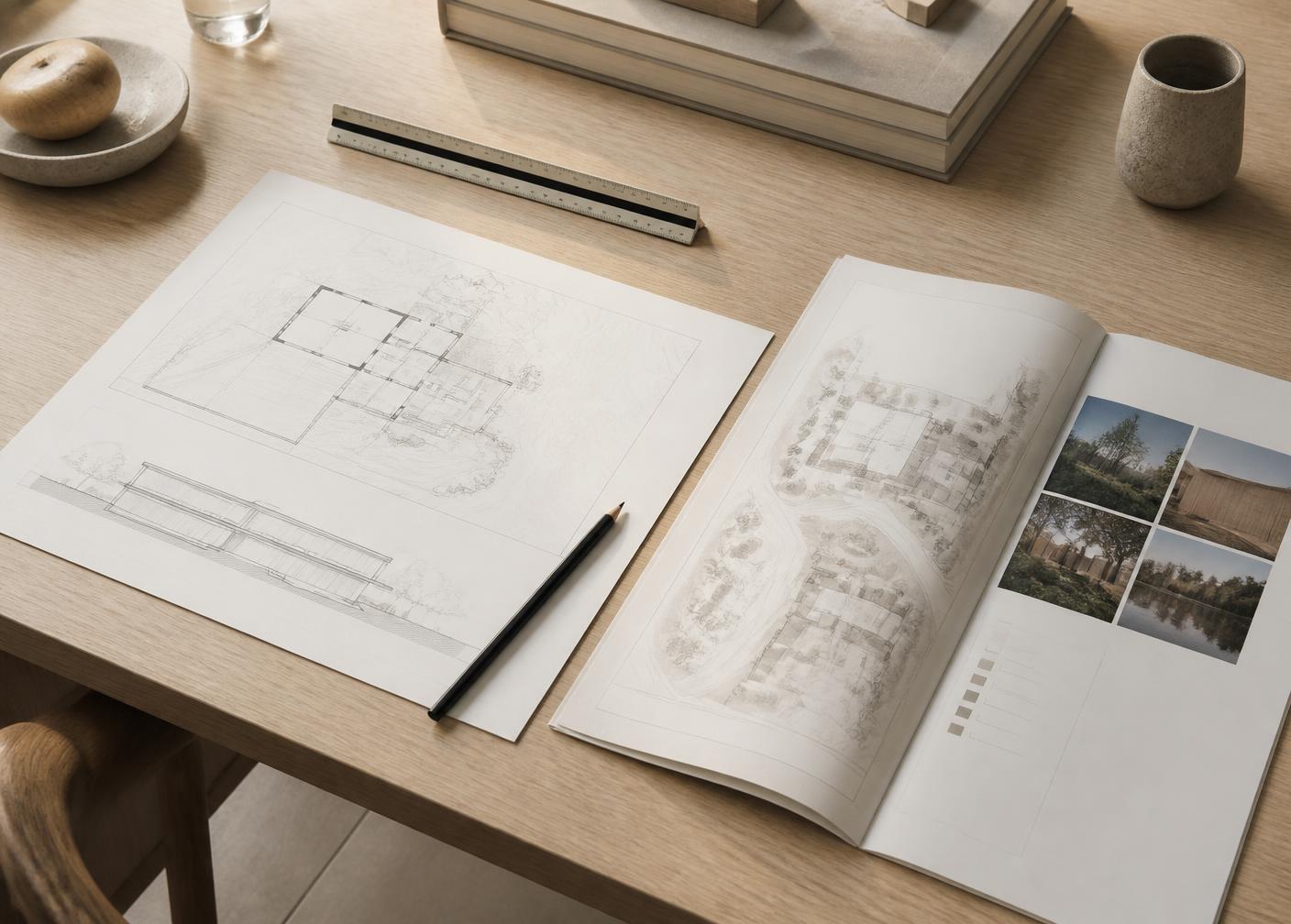
We publish work only where the project is complete and the owner has agreed to it being shown. Photographs on this page are editorial reference imagery and do not represent completed Cavalma projects.
Selected supervised projects - in preparation
Project supervision, answered plainly.
Do you replace the architect?
No. The architect designs the project and carries the professional responsibility for that design. Cavalma works on the owner's side, coordinating communication, following progress and making sure the owner understands and approves what is being built.
Do you supervise contractors?
We monitor progress and workmanship against the agreed scope and report to the owner, and we raise observations with the contractor and the appointed professionals. Statutory site management and technical certification remain with the licensed professionals appointed to the project.
Can you represent owners living abroad?
Yes. That is the most common reason owners engage this service. We attend meetings and site visits, consolidate questions, report in writing with photographs, and prepare the agenda for the owner's own visits.
How often are reports prepared?
At a frequency agreed at the outset - typically weekly or fortnightly during active works - and additionally after significant milestones or if something arises that the owner should know immediately.
Can you coordinate meetings between the professionals?
Yes. We schedule and attend meetings with the architect, contractor and specialists, and circulate a written record of what was agreed and what remains open.
Do you help manage changes to the project?
Yes. When a change is requested by the owner or required by site conditions, we make sure it is described, priced and approved in writing before it is executed, and that its effect on programme and budget is understood first.
Can you inspect progress before surfaces are closed?
We attend at the points where later access becomes difficult - waterproofing, first fix, substrates - and record them photographically. Where a formal technical inspection is required, we coordinate a qualified specialist.
Do you take responsibility for structural or technical certification?
No. Structural calculations, certificates, licences and health-and-safety coordination belong to the qualified professionals appointed for them. We coordinate those appointments and keep the resulting documentation organised for the owner.
Can you take over a project that has already started?
Yes. We begin with a review of the current documentation, scope and programme, and set out plainly what is clear, what is missing and what should be agreed before work continues.
Do you find the contractor, or work with the one we have?
Either. Where an owner is still selecting, we coordinate tendering and comparison of proposals on a like-for-like basis. Where a team is already appointed, we work alongside it.
What happens at completion?
We carry out a structured walk-through, prepare an outstanding-item list, track each item to closure, and assemble warranties, manuals and service records for handover.
Which areas do you cover?
Marbella, the Golden Mile, Puerto Banús, Nueva Andalucía, Sierra Blanca, La Zagaleta, Benahavís, Estepona and Sotogrande. Other locations on the Costa del Sol are considered on request.
Where supervision sits in the Property practice.
Renovation & Construction
The works themselves: scope, design coordination, procurement and delivery.
Inspection & Technical Diagnostics
Independent technical review before purchase, before works and at milestones.
Interior Design & Furnishing
Interiors, materials and furnishing delivered in step with the construction programme.
Property Care & Maintenance
Year-round care once the project is complete and the house is in use.
Buy Property
Acquisition support, with renovation potential assessed before you commit.
Furnishing & Styling
Furniture, lighting and final styling scheduled around the works programme.
Property Care
The full set of ownership support the office coordinates after completion.
Locations
Marbella, Benahavís, Estepona and Sotogrande, area by area.
Private Office
One relationship across property, mobility, lifestyle and security.
Tell us about your project
Share the property, the stage the project has reached and where you will be while it runs. We will reply with a considered view of how supervision would work in your case.
- Written scope of supervision before we begin
- One point of contact, in your language
- Qualified professionals coordinated for regulated work
- Reports with dated photographs after each visit