Málaga Airport to Marbella: The Complete Private Transfer Guide
Málaga Airport sits fifty-five kilometres from Marbella, yet the drive is rarely what shapes an arrival. A practical guide to how a private transfer works from the aircraft door to the front door, including terminal timings, vehicle choice, children, and arrivals at Puerto Banús, the Golden Mile, Benahavís, La Zagaleta, Estepona and Sotogrande.
- Arrival logistics
- Routes
- Málaga Airport to Marbella is roughly 55 kilometres and forty to sixty minutes. The AP-7 toll motorway is materially faster than the coastal A-7 in summer and at peak hours.
- Plan the first evening from the aircraft door, not the scheduled landing time. Passport control, the belt and outsize baggage can add an hour before the car moves.
- Choose the vehicle by luggage volume rather than passenger count, and declare golf bags, pushchairs and each child's age, height and weight at the time of booking.
- Gated destinations need access information, not only an address: the estate name, the correct gate, the code or expected name, and a mobile number reachable in Spain.
- A transfer is one journey priced by route; a private chauffeur is reserved by time and stays available between movements. Many stays sensibly use both.
Every guide to a private transfer begins in the wrong place. It begins with the car. In practice, the journey from Málaga Airport to Marbella is decided long before anyone reaches a vehicle, in the forty or so minutes between the aircraft touching down and the moment the boot closes on the last suitcase. That period is where arrivals are made calm or made difficult, and almost none of it happens on the road.
This guide explains how a private transfer from Málaga Airport (AGP) to Marbella actually works, step by step, from the aircraft door to the front door. It covers distances and realistic travel times, what happens inside the terminal, how flight monitoring and delays are handled, how vehicles are matched to luggage rather than to passenger numbers, and how arrivals differ at Puerto Banús, the Golden Mile, Benahavís, La Zagaleta, Estepona and Sotogrande. A companion article, the complete guide to arriving in Marbella, addresses the earlier question of which arrival solution to choose. This one assumes the decision is made and explains the mechanics.
How far is Málaga Airport from Marbella?
Málaga Airport sits roughly 55 kilometres east of Marbella. The drive takes between forty and sixty minutes in ordinary conditions, and the distance itself is the least variable part of the equation.
Two roads connect the airport to Marbella. The AP-7 is a tolled motorway that runs slightly inland and carries less traffic. The A-7, also called the N-340 along parts of its length, is the free coastal road that passes through Torremolinos, Fuengirola and Calahonda. In quiet periods the two roads produce almost the same journey time. In August, on Friday evenings, and during the hours around a major event in Marbella or Puerto Banús, the AP-7 can be twenty to thirty minutes faster.
Journey times to the wider Costa del Sol vary more than most visitors expect. From Málaga Airport, allow approximately forty to fifty minutes to the Marbella Golden Mile, fifty to sixty-five minutes to Puerto Banús, fifty-five to seventy minutes to Benahavís or La Zagaleta because the final section climbs inland, sixty-five to eighty minutes to Estepona, and eighty to ninety-five minutes to Sotogrande. These are working estimates for a private vehicle travelling outside peak congestion, not guarantees.
Timing varies for four reasons, and it is worth understanding each. The first is seasonality: coastal traffic between mid-July and the end of August behaves differently from the same route in February. The second is the time of day, with the heaviest flow between 17:00 and 20:00 in summer. The third is the destination, since a gated estate above Benahavís adds climbing distance that a beachfront hotel does not. The fourth is the arrival process itself, because a transfer that begins twenty-five minutes late at the terminal arrives twenty-five minutes late regardless of how quickly the car travels.
A useful planning habit is to think in arrival windows rather than arrival times. If a dinner reservation is at 21:00 and the flight lands at 18:30, the honest calculation is landing, then thirty to fifty minutes inside the terminal, then fifty to sixty-five minutes on the road, then time at the property. The margin is comfortable but not generous, and it is far better understood before departure than discovered afterwards.
What happens after landing?
The terminal sequence at Málaga is predictable, and knowing it removes most of the anxiety from a first arrival.
Passport control comes first for arrivals from outside the Schengen Area, including flights from the United Kingdom, the United States, the Gulf states and Switzerland. Waiting times range from a few minutes in the early morning to forty-five minutes or more when several long-haul and UK flights land together. Passengers arriving on Schengen flights, from Madrid, Paris, Geneva or Munich for example, walk directly to baggage reclaim and typically clear the terminal considerably faster.
Baggage collection follows. Belts at Málaga usually begin moving ten to twenty minutes after the aircraft parks, though a full wide-body aircraft or a remote stand can extend that. Oversized items, including golf bags, ski equipment, pushchairs and musical instruments, are delivered separately at the outsize baggage point, which is the single most common reason an otherwise smooth arrival takes an extra twenty minutes. Travellers carrying golf equipment should tell the transfer provider in advance, both for timing and for luggage capacity.
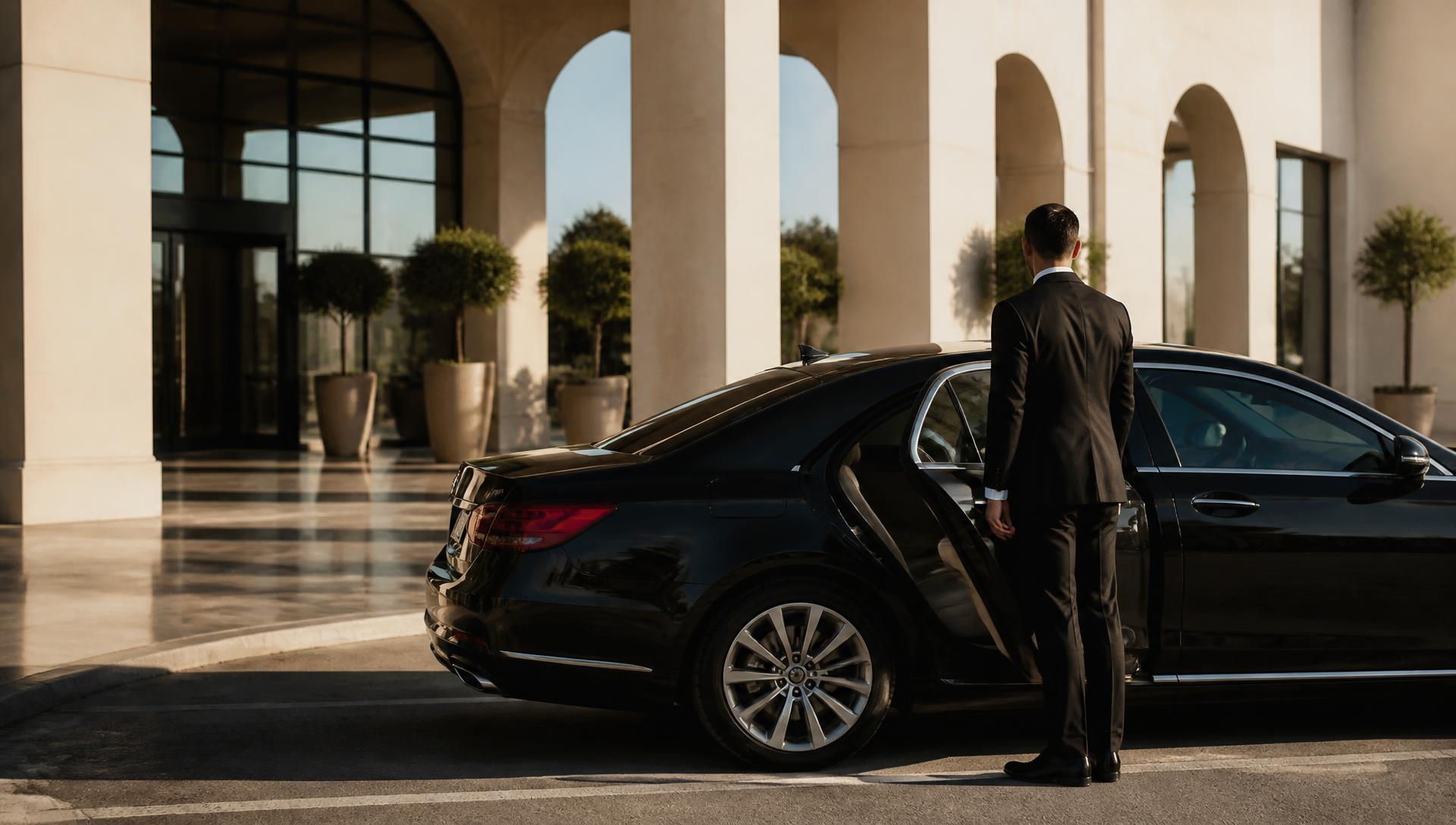
Meeting the chauffeur is the step that most differentiates a private transfer from other options. In a properly arranged arrival, the chauffeur is already inside the terminal in the arrivals hall before the aircraft doors open, holding a discreet name board, and the guest does not telephone anyone, does not walk to a car park, and does not queue. The chauffeur takes the luggage trolley and walks the party to the vehicle. Where a client prefers no name board, as is common for public figures and for families travelling with children, the meeting point is agreed in writing before travel and the chauffeur waits at a specific fixed location instead.
Flight monitoring runs behind all of this. A professional operator tracks the inbound flight number from departure, not from the scheduled landing time, so that the chauffeur's arrival at the terminal is adjusted to the aircraft rather than to the timetable. This matters most when a flight arrives early, which happens more often than travellers assume, and when a flight is diverted or delayed at origin.
Delays are handled by adjustment rather than by cancellation. A pre-booked private transfer is normally held for a delayed flight without any action from the passenger, and the standard commercial practice on the Costa del Sol is to include a period of complimentary waiting time after landing, typically around sixty minutes for international arrivals and less for domestic ones. What matters is not the exact allowance but that the client knows the figure before travelling. This is a fair question to ask any provider, and a clear answer is a reliable indicator of how the company operates.
International arrivals carry two additional considerations. Guests connecting from a long-haul flight through Madrid or Lisbon should plan for the domestic leg to arrive in a different part of the terminal from the intercontinental one. Guests arriving on a private aircraft use the general aviation terminal, a separate facility with its own access, where the vehicle can normally be brought close to the aircraft and the transfer begins within minutes of the engines stopping. Cavalma coordinates arrivals at both the commercial terminal and the general aviation terminal, and the difference in ground handling is significant enough that it should always be stated at the time of booking.
One practical note applies to every arrival. The mobile telephone number given at the time of booking should be the number that will be switched on and reachable in Spain, not a number left in flight mode or a landline. Almost every arrival that becomes complicated does so because the two parties cannot reach one another for fifteen minutes.
Private transfer versus taxi
Both options move a passenger from Málaga Airport to Marbella, and both are legitimate. The differences are practical rather than moral, and they matter more on some journeys than on others.
A taxi is taken from the rank on arrival. There is no reservation, no allocation of a specific vehicle and no advance knowledge of the driver. Fares between the airport and Marbella are regulated on a zonal basis, the vehicle is whichever car is next in line, and the arrangement suits a traveller with light luggage, no children and no fixed timing.
A private transfer is reserved in advance for a named passenger, at a fixed price, in a specified vehicle, with a named chauffeur who meets the party inside the terminal. The flight is monitored, the luggage capacity is confirmed before travel, child seats are fitted and checked in advance, and the destination is verified, including gate codes and access arrangements that satellite navigation cannot resolve.
The practical differences concentrate in five places. Waiting is the first: a taxi rank at 22:00 in August behaves differently from the same rank at 11:00 in March. Capacity is the second, since the vehicle at the front of the rank may not hold six suitcases, two golf bags and a pushchair. Child seats are the third, because appropriate seats are not reliably available on demand. Destination knowledge is the fourth, and it is decisive for La Zagaleta, for unnamed villa lanes in Benahavís and for developments where the entrance is not where the map suggests. Continuity is the fifth: a transfer provider retains the booking record, so a return journey, a second vehicle or a change of plan is handled by someone who already holds the details.
None of this makes a taxi a poor choice for a simple journey. It makes a private transfer the appropriate choice when luggage, children, timing, privacy or an awkward address are part of the picture. Cavalma's luxury transfers exist for precisely those journeys, and the honest test of whether one is needed is to look at the luggage list and the address rather than at the budget.
Choosing the right vehicle
Vehicles should be selected by luggage volume and journey purpose, not by the number of passengers. A saloon that seats three comfortably will not carry three passengers' worth of holiday luggage, and this single misunderstanding causes more arrival difficulty than any other.
The business traveller travelling alone or in a pair, with cabin bags and a laptop, is best served by an executive saloon such as a Mercedes-Benz S-Class or a Mercedes-Maybach S-Class. The cabin is quiet enough for telephone calls, the rear seats recline, and the journey from the terminal to a meeting in Marbella becomes usable working time rather than lost time.
A couple travelling for a week will typically have two large cases, two cabin bags and personal items. A luxury saloon handles this comfortably. A couple travelling for a month, or travelling with sports equipment, is better placed in a Mercedes-Benz V-Class, where the luggage sits behind the rear row rather than in the cabin.
A family of four with holiday luggage should plan for a V-Class or an equivalent luxury van rather than a saloon. The additional space is not a luxury in this case, it is the difference between a comfortable hour and an uncomfortable one, and it also allows child seats to be fitted without displacing an adult passenger.
Groups of five to seven passengers with full luggage generally need either a luxury van with a trailer, a second vehicle, or both. Two vehicles frequently produce a better journey than one crowded one, and the cost difference is smaller than most travellers expect once luggage is honestly counted.
Large luggage should be declared in advance by item, not by estimate. Six large cases, four cabin bags and a pushchair is a clear instruction. The phrase "a normal amount of luggage" is not, since it means different things to different families.
Golf equipment deserves separate mention because the Costa del Sol receives a great deal of it. A single golf travel bag occupies roughly the same space as a large suitcase and cannot be placed on a seat. Four golfers with clubs, cases and shoes require a van, and often a van plus a saloon. Guests travelling to Benahavís, Sotogrande or the courses around Estepona should state the number of golf bags at the time of booking, and the vehicle will be matched accordingly.
Children change the calculation in a specific way, because each child seat occupies a full seating position. A family of two adults and three children in seats is a six-seat requirement, not a five-seat one, once bags are included.
Travelling with children
A transfer with young children is a logistics exercise rather than a comfort question, and it rewards precision at the time of booking.
Spanish law requires children under 135 centimetres in height to travel in an approved child restraint appropriate to their size, and enforcement is normal rather than exceptional. The correct information to supply is each child's age, height and weight. Age alone is insufficient, because a tall four-year-old and a small four-year-old need different equipment.
Three categories cover most arrivals. Infant carriers, rear-facing, suit babies up to around fifteen months. Forward-facing seats with an integral harness suit toddlers and young children. Booster seats, with or without a back, suit older children until they reach the height threshold. A professional transfer provider fits the seat before the vehicle leaves for the airport and checks the installation rather than handing the seat to a parent in the car park.
Safety is improved by two habits. The first is confirming, in writing, that the correct seats have been reserved for the specific journey, including the return. The second is allowing the chauffeur to load the luggage while the parents settle the children, which is faster than the reverse and considerably calmer.
Planning around a child's schedule matters more than the vehicle specification. A flight landing at 22:30 with two children under five will produce a different arrival from the same flight without them. Where a family has flexibility, an earlier flight almost always produces a better first evening. Where it does not, arranging for the villa or hotel to have a simple meal available on arrival removes the need for a further journey that night, and a concierge arrangement can put that in place before the aircraft lands.
Comfort on the road is straightforward. A van offers space for a pushchair without dismantling it, allows a parent to sit beside a child, and provides room for the bags that always accompany small children. Water, a stable temperature and a route without unnecessary stops complete the picture. Chauffeurs who regularly carry families keep the cabin quiet and do not attempt conversation with a sleeping child in the back, which is a small courtesy that families notice.
Travelling to Puerto Banús
Puerto Banús lies approximately 62 kilometres from Málaga Airport, and the journey takes fifty to sixty-five minutes in normal conditions.
The route runs along the AP-7 or the A-7 to the San Pedro de Alcántara area, then east along the coast to the marina. The final two kilometres are the variable part. In July and August, and on any evening when the marina is busy, the approach roads around the port move slowly, and the last stretch can take as long as the previous fifty.
Arrival at the marina itself requires a decision made in advance. Vehicles cannot always stop directly beside a berth, and the pedestrian areas around the port are closed to traffic at certain hours. Guests joining a yacht should confirm the berth number and the nearest vehicle access point before travelling, and a chauffeur who knows the port will set down at the correct gate rather than at the general car park.
Hotel arrivals in the Puerto Banús area are usually simple, since the principal hotels have clearly marked entrances and staffed forecourts. The complication is more often the apartment blocks behind the marina, where entrances face away from the main road and underground parking access is easily missed. Supplying the building name, the street entrance and, where relevant, the concierge telephone number resolves this before it becomes a problem.
Guests continuing to a yacht should also consider the timing of the outbound leg. Departures from the marina frequently happen early, and coordinating a chauffeur for an 07:00 departure requires the arrangement to be made at the time of arrival rather than the night before. Cavalma coordinates transfers alongside yachting arrangements, so that the vehicle and the vessel are working to the same schedule.
Travelling to Marbella Golden Mile
The Golden Mile, the stretch between Marbella town and Puerto Banús, is around 57 kilometres from the airport and takes forty-five to sixty minutes.
Typical destinations divide into two groups. The first is the established hotel corridor, where arrivals are straightforward and the vehicle is met at a forecourt. The second is the residential side, a series of private villas and gated urbanisations set back from the main road, where the address as written rarely matches what the driver sees.
Villa arrivals on the Golden Mile depend almost entirely on preparation. The information that makes the difference is the urbanisation name, the gate to use where there is more than one, the access code or the name the security post is expecting, and a contact number for the house. A property manager or housekeeper who knows the vehicle is coming will open the gate rather than asking the driver to wait at an intercom with a family in the car.
Privacy is a genuine consideration on this stretch. Several of the properties are well known, and residents value arrivals that attract no attention. In practice this means a vehicle without external branding, a chauffeur who does not photograph the property, no discussion of the address on the telephone in public areas, and luggage unloaded inside the gates rather than on the road. Where a client requires a higher standard than discretion alone, executive protection can be arranged as part of the same movement rather than as a separate service.
Travelling to Benahavís
Benahavís sits inland behind Marbella and Estepona, roughly 68 kilometres from the airport, with a journey of fifty-five to seventy minutes.
Golf is the principal reason visitors travel there. The municipality contains several of the region's best-known courses, and arrivals from the airport frequently include golf luggage. The vehicle should be selected on that basis, and the tee time on the day of arrival should allow for the terminal, the drive and the climb.
The residential areas around Benahavís spread across the hillsides above the village, in a series of urbanisations reached by winding roads. Journey times within Benahavís itself vary considerably: two properties with the same postal address can be twelve minutes apart. This is normal for the area and simply needs to be accounted for rather than avoided.
Mountain access carries two practical implications. The first is that the final approach is slower than the motorway section, so the last ten kilometres may take twenty minutes. The second is that in poor weather, which is rare but real in November and December, some upper roads are best driven by someone who knows them. A chauffeur familiar with the area treats these roads as ordinary. A visitor driving a hired car at night after a flight generally does not, which is one of the clearest cases for a transfer on arrival day and a luxury car rental delivered to the property the following morning.
Travelling to La Zagaleta
La Zagaleta, the private estate above Benahavís, is approximately 70 kilometres from Málaga Airport, with a journey of around sixty to seventy-five minutes.
Security procedures at the estate are more formal than at a conventional urbanisation, and this is the defining characteristic of any arrival there. Access is controlled at a manned entrance, and vehicles are admitted on the basis of a prior authorisation given by the resident or the property's representative, not on the basis of the guest's word at the gate.
The practical requirement is straightforward. The resident, the villa's manager or the rental agent must register the arrival in advance, with the vehicle details, the chauffeur's name and the expected time. A transfer company that has worked with the estate before will ask for this at the time of booking. A company that does not ask is a company whose vehicle may be waiting at the gate.
Arrival coordination inside the estate matters as well, because properties are widely separated and not visible from the roads. The villa name is the useful reference, together with a contact who can meet the vehicle. Guests arriving for the first time should expect the final section, from the entrance to the front door, to take several minutes.
The same discipline applies to departures. Where a guest is leaving for an early flight, the chauffeur's access must be arranged for that morning as well, since authorisation is granted per movement rather than for the length of a stay.
Travelling to Estepona
Estepona is approximately 85 kilometres from Málaga Airport, with a journey of sixty-five to eighty minutes.
Families make up a large share of arrivals here, and the longer journey shapes the planning. An hour and a quarter after a flight is manageable for adults and demanding for small children, so the vehicle choice, a comfortable van rather than a full saloon, matters more than it would on a shorter route.
Holiday properties around Estepona range from beachfront apartments to villas in the hills towards Casares. The address problem is the same as elsewhere but slightly more pronounced, because several developments lie along the N-340 where access is from a service road rather than from the main carriageway. A photograph of the entrance, sent in advance, is a genuinely useful thing to supply and takes a client thirty seconds.
Longer journeys also affect the return leg. A departure from Estepona for a 09:00 flight means leaving the property at approximately 06:15 to allow for the drive and the terminal. Where a family would rather not do that, an overnight stay closer to the airport on the final night is a reasonable alternative, and it is the kind of adjustment that is easier to make three weeks ahead than three days.
Travelling to Sotogrande
Sotogrande lies approximately 105 kilometres from Málaga Airport, an eighty to ninety-five minute journey, and it is also within reach of Gibraltar Airport (GIB), which is around twenty-five minutes away.
Business visitors to Sotogrande frequently arrive for a fixed appointment, and the length of the journey makes flight monitoring more valuable rather than less. An hour and a half of road time absorbs a short delay comfortably and absorbs a ninety-minute delay not at all, so the departure plan should be set against the meeting rather than against the flight.
Golf is the second common purpose. The courses around Sotogrande draw visitors throughout the year, and equipment considerations mirror those for Benahavís: declare the bags, take the van.
The marina at Sotogrande operates on a calmer rhythm than Puerto Banús, and vehicle access is generally easier. Guests joining a vessel should still confirm the berth and the access point, particularly for early departures.
The residential community is extensive and organised into distinct zones, each with its own character and access arrangements. As with La Zagaleta, the useful information is the zone, the property name and a contact at the house. Guests deciding between Marbella and Sotogrande as a base will find that the airport journey is one of the meaningful differences between them, and it is worth weighing at the planning stage rather than on the first evening.
When should you choose a private chauffeur instead?
A transfer and a chauffeur solve different problems, and the distinction is one of structure rather than of quality.
A transfer is a single journey between two points, priced by route, that ends when the luggage is unloaded. A private chauffeur is reserved by time, for a half day, a full day or a series of days, and remains available between journeys. The vehicle waits. The plan can change during the day without a new booking.
Four situations point clearly towards a chauffeur. The first is a day with several movements: a property viewing in the morning, lunch in Marbella, a meeting in Estepona and dinner in Puerto Banús is a chauffeur day, not four transfers. The second is an uncertain schedule, where the end time of a meeting or a viewing is genuinely unknown. The third is a family with children, where the vehicle effectively becomes a moving base for the day. The fourth is business travel with confidential telephone calls, where the same driver throughout the day is preferable to three different ones.
A transfer remains the right choice for a simple arrival and departure, for a single evening out, and for any journey where the timing is fixed and the route is known. Many stays use both, with transfers at each end and a chauffeur on the two or three days that require movement.
When should you rent a luxury car instead?
Self-drive suits certain trips genuinely well, and it is worth assessing objectively rather than dismissing.
The advantages are real. A car at the property gives complete independence, which matters most for longer stays and for guests based outside the town centres, where a short trip to a supermarket or a beach club otherwise becomes a booking. It is usually more economical across a stay of ten days or more than daily chauffeured movements. For guests who enjoy driving, the roads between Ronda, Benahavís and the coast are among the most rewarding in southern Spain.
The limitations are equally real. Parking in Marbella old town and around Puerto Banús is difficult in season. Driving after a long flight, at night, on unfamiliar roads, with children in the car, is the single least attractive moment to begin a self-drive holiday. Any evening involving wine requires a different plan. And collecting a car from an airport desk at the end of a delayed flight is precisely the queue that a transfer exists to avoid.
The arrangement that resolves most of this is simple and widely used: take a transfer on arrival, and have the rental car delivered to the villa or hotel the next morning. The first evening is calm, the queue disappears, and the independence begins when it is actually useful. Cavalma's luxury car rental is coordinated on that basis, and delivery to the property is the normal arrangement rather than an exception.
When does a private office become valuable?
A private office is not a premium version of a transfer. It is a different structure, and it becomes valuable at the point where the number of separate arrangements starts to create work for the client.
The threshold is easier to recognise than to define. One flight, one car and one hotel does not require coordination. A ten-day stay with an arrival transfer, a chauffeur on three days, a rental car delivered on the second morning, two restaurant reservations that matter, a yacht day, a golf booking, a housekeeper at the villa and a return transfer for eight people is a coordination exercise with eight separate counterparties, and somebody has to hold it together.
Multiple reservations are the first case. When a single point holds the whole plan, a flight delay of ninety minutes results in one message rather than eight, and the restaurant, the villa and the chauffeur are all adjusted without the client managing it from a departure lounge.
Restaurants and lifestyle arrangements are the second. Tables in Marbella during August behave like tickets rather than like reservations, and the useful thing is not access alone but sequencing: a booking that fits the day, with a vehicle that is already scheduled to be there.
The villa is the third. Arrival provisioning, staff, maintenance issues and the small practicalities of a rented property are simpler when they sit beside the mobility arrangements rather than in a separate conversation.
Security is the fourth. Where discretion or protection is required, it works best when it is part of the same plan as the vehicles and the schedule, not bolted on afterwards.
The honest summary is that a private office removes the gaps between suppliers. Most arrival problems on the Costa del Sol do not happen inside a service. They happen between two of them, and the value of coordination is that nobody notices it working.
Common planning mistakes
None of these are unusual, and all of them are avoidable with a few minutes of preparation.
Booking by passenger count rather than by luggage volume is the most frequent. Four adults fit comfortably in a saloon. Four adults with a week of luggage do not.
Giving a postal address without access information is the second. A villa address in Benahavís or La Zagaleta may be geographically accurate and operationally useless. The gate, the code, the urbanisation name and a contact number are what the chauffeur actually needs.
Underestimating the terminal is the third. Non-Schengen passport control, a busy belt and an outsize baggage collection can add an hour to an arrival before the car has moved. Plan the evening from the aircraft door, not from the scheduled landing time.
Arranging child seats on arrival rather than in advance is the fourth, and it is the one most likely to stop a journey entirely. Ages, heights and weights, given at the time of booking, resolve it completely.
Planning an ambitious first evening is the fifth. A 21:00 dinner reservation after a flight that lands at 18:30 with children is technically possible and rarely enjoyable.
Collecting a rental car on arrival night is the sixth. Delivery the following morning costs little and changes the character of the first evening.
Forgetting the return is the seventh. Departure transfers are frequently arranged late, and early morning departures from Estepona, Sotogrande or an estate with controlled access require more notice than a hotel pickup in Marbella.
Failing to mention golf clubs, pushchairs, ski bags or a dog is the eighth. All are entirely manageable when known in advance and all are difficult when discovered in the car park.
Using a telephone number that will not work in Spain is the ninth, and it quietly causes more difficulty than any of the others.
Frequently Asked Questions
How long does a transfer from Málaga Airport to Marbella take?
Between forty and sixty minutes in ordinary conditions, for a distance of roughly 55 kilometres. Allow towards the upper end in July and August and during the early evening.
How far is Málaga Airport from Marbella in kilometres?
Approximately 55 kilometres by road, using either the AP-7 toll motorway or the free coastal A-7.
Which road is faster, the AP-7 or the A-7?
The AP-7 is usually faster in busy periods because it carries less traffic and bypasses the coastal towns. In quiet periods the two are broadly similar. The AP-7 is tolled; the A-7 is not.
Where does the chauffeur meet me at Málaga Airport?
Inside the terminal, in the arrivals hall, before the aircraft doors open. The chauffeur normally holds a discreet name board and takes the luggage to the vehicle. Where a client prefers no name board, a fixed meeting point is agreed in advance.
What happens if my flight is delayed?
The flight is monitored from departure and the chauffeur's arrival is adjusted to the aircraft rather than to the timetable. A pre-booked private transfer is held for a delayed flight without any action from the passenger.
How much waiting time is included after landing?
Practice on the Costa del Sol is typically around sixty minutes of complimentary waiting for international arrivals and less for domestic ones. The figure should be confirmed in writing at the time of booking.
Should I book a transfer in advance or take a taxi on arrival?
A taxi is adequate for a simple journey with light luggage. Book a private transfer in advance when there are children, substantial luggage, a fixed schedule, a privacy requirement or a villa address with controlled access.
What size vehicle do I need?
Choose by luggage volume, not passenger count. Two people with two large cases suit a luxury saloon. A family of four with holiday luggage, or any party with golf equipment, should take a Mercedes-Benz V-Class or a similar luxury van.
Can you carry golf equipment?
Yes, provided the number of golf bags is stated at the time of booking. A golf travel bag occupies roughly the space of a large suitcase, so four golfers with clubs and cases will normally require a van.
Are child seats provided?
Yes. Spanish law requires an approved restraint for children under 135 centimetres. Supply each child's age, height and weight when booking so that the correct seat is fitted and checked before the vehicle leaves for the airport.
How long is the transfer from Málaga Airport to Puerto Banús?
Fifty to sixty-five minutes for approximately 62 kilometres. The final two kilometres around the marina are the most variable part in summer.
How long does it take to reach La Zagaleta from the airport?
Around sixty to seventy-five minutes. Access to the estate requires prior authorisation from the resident or the property's representative, including the vehicle and chauffeur details.
What information do you need for a villa arrival?
The urbanisation or estate name, the correct gate, any access code or the name the security post expects, the property name, and a mobile number that will be reachable in Spain.
How long is the journey from Málaga Airport to Sotogrande?
Eighty to ninety-five minutes for approximately 105 kilometres. Gibraltar Airport is around twenty-five minutes from Sotogrande and is worth considering for guests based there.
Can I be collected from Gibraltar Airport instead?
Yes. Gibraltar is a practical arrival point for Sotogrande and the western Costa del Sol. The journey involves a land frontier, so a modest additional allowance should be made for the crossing.
Do you meet private aircraft at Málaga?
Yes. Arrivals by private aircraft use the general aviation terminal, where the vehicle can normally be brought close to the aircraft and the transfer begins within minutes of arrival. This should be stated at the time of booking because the ground arrangements differ from the commercial terminal.
What is the difference between a transfer and a private chauffeur?
A transfer is one journey between two points, priced by route, that ends on arrival. A private chauffeur is reserved by time, remains available between journeys and allows the day's plan to change without a new booking.
Is it better to rent a car or use transfers?
A rental car suits stays of ten days or more, properties away from the town centres and guests who enjoy driving. Transfers and chauffeurs suit arrival day, evenings out and periods of heavy traffic. Many stays use both, with the rental car delivered to the property the morning after arrival.
Can a rental car be delivered to my villa or hotel?
Yes, and it is the arrangement most guests prefer. Delivery to the property avoids the airport desk at the end of a delayed flight and means the car arrives when it is genuinely useful.
Can you arrange a return transfer for an early flight?
Yes. Early departures from Estepona, Sotogrande or an estate with controlled access require more notice than a hotel pickup, because gate authorisations are granted per movement rather than for a whole stay.
Do you offer transfers for groups?
Yes. Groups of five to seven with full luggage generally travel best in a luxury van, a van with a trailer, or two vehicles. Two vehicles often produce a more comfortable journey than one crowded one.
Is the price fixed in advance?
A private transfer is quoted as a fixed price for the route and vehicle before travel. Any additional stops, extended waiting beyond the included period or changes to the itinerary should be agreed in writing.
How do you handle privacy on the Golden Mile and in gated estates?
Unmarked vehicles, no photography of properties, no discussion of addresses in public areas, and unloading inside the gates where possible. Where more than discretion is required, executive protection can be arranged as part of the same movement.
Which is the better base, Marbella or Sotogrande?
Marbella suits visitors who want restaurants, shopping and beach clubs within a short drive. Sotogrande suits golf, sailing and a quieter residential rhythm. The airport journey differs by around thirty minutes, which is worth weighing at the planning stage.
Can one point coordinate transfers, chauffeurs, a rental car and restaurants?
Yes. That is the function of a private office. A single point holding the whole plan means that a delayed flight results in one message rather than several, and the vehicles, the property and the reservations are all adjusted together.
Conclusion
The journey from Málaga Airport to Marbella is fifty-five kilometres of good road. Almost everything that determines how it feels happens either side of that: the accuracy of the information given at the time of booking, the vehicle matched to the luggage rather than to the head count, the chauffeur waiting in the terminal before the aircraft doors open, the gate code that was registered a week earlier.
None of this is complicated, and none of it requires a particular level of expenditure. It requires the details to be settled while there is time to settle them. A traveller who reads nothing else should take three things from this guide: count the luggage honestly, give the access information as well as the address, and plan the first evening from the aircraft door rather than from the timetable.
The companion guide to arriving in Marbella covers the earlier question of which arrival solution suits a particular trip. Where a plan involves several moving parts, or simply a first visit to an address that is difficult to find, Cavalma's private office is available to hold the arrangements together, and can be reached through the contact page.
RELATED SERVICES
RELATED PLACES
- Málaga Airport (AGP)
- Benahavís
- Costa del Sol
- Estepona
- Golden Mile
- La Zagaleta
- Marbella
- Puerto Banús
- Sotogrande
Continue reading
The Complete Guide to Arriving in Marbella: Airport, Chauffeur, Car Rental or Private Office?
Marbella has no airport of its own, so every visit begins with a road journey and a set of choices. An editorial guide to arriving on the Costa del Sol, and to deciding between a transfer, a chauffeur, a rental car or one coordinated office.
Private Chauffeur vs Luxury Car Rental in Marbella: Which Is Right for Your Stay?
A private chauffeur and a luxury rental car solve different problems in Marbella. A practical comparison across business travel, family holidays, dining, golf, privacy and cost, including how most stays end up using both.
What Is a Private Office in Marbella, and How Is It Different from a Concierge?
A Private Office coordinates travel, property, security and lifestyle for international visitors to Marbella. A practical explanation of what it is, what it is not, and how it differs from a concierge desk.
Speak with the office
For arrivals, property, protection or a longer conversation, our private office is reachable every day.